Key Quality Standards for Selecting High-Performance Polystyrene Granules for Industrial Use
2026-01-31
Why Iran is a Leading Global Hub for High-Quality Polystyrene Granule Exports
2026-02-10
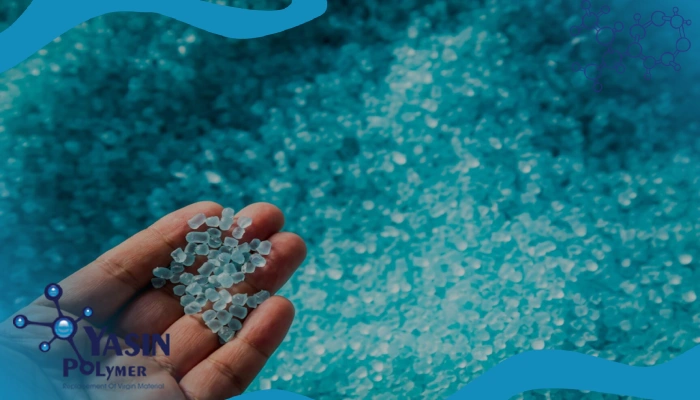
In the rapidly evolving world of polymer science, sustainability has shifted from a corporate buzzword to a fundamental operational requirement. As global industries face stricter environmental regulations and fluctuating raw material costs, Recycled GPPS Granule (GPPS) has emerged as a high-performance, eco-friendly alternative to virgin resins.
At Yasin Polymer, we specialize in bridge-building between industrial efficiency and environmental stewardship. By providing premium Polystyrene granule Iran, we empower manufacturers to maintain high-quality outputs while significantly reducing their ecological footprint. This comprehensive guide explores the multifaceted benefits of using recycled GPPS in the modern packaging industry.
-
Significant Cost Reduction and Economic Efficiency
Maximizing Profit Margins through Sustainable Sourcing
The most immediate driver for adopting Recycled GPPS Granule is the profound impact on the manufacturer’s bottom line. The production of virgin plastic is inextricably linked to the volatility of the global oil market. By switching to recycled polymers, businesses can decouple their production costs from these unpredictable fluctuations. This is particularly relevant for those sourcing Polystyrene granule Iran, where local production offers a hedge against import duties and international shipping spikes.
Furthermore, the energy required to process recycled granules is significantly lower than that of raw petrochemical extraction. This reduction in overhead—from energy consumption to raw material procurement—allows companies to offer more competitive pricing in the market. In a world where price-sensitive consumers and retailers demand value, the cost-efficiency of Recycled EPS Granule and GPPS gives manufacturers a decisive edge, allowing for reinvestment into R&D or facility upgrades.

Financial Resilience in a Volatile Market
Utilizing recycled materials creates a more stable supply chain. Unlike virgin resins that may face shortages due to refinery shutdowns or geopolitical tensions, the “urban mine” of recyclable plastic provides a consistent stream of feedstock. For partners of Yasin Polymer, this means consistent availability of Polystyrene granule, ensuring that production lines never stall due to external market shocks.
-
Environmental Sustainability and Carbon Footprint Reduction
Championing the Circular Economy in Plastic Manufacturing
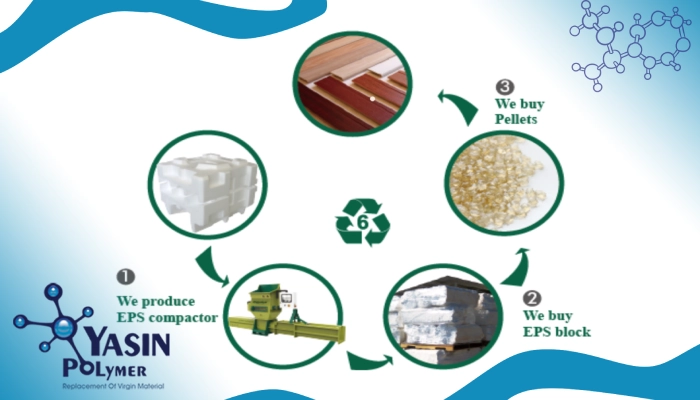
Integrating Recycled GPPS Granule into your production line is a tangible commitment to the Circular Economy. Traditionally, the plastic industry followed a linear “take-make-waste” model. However, by utilizing Polystyrene granule that has been recovered and reprocessed, we close the loop. This process significantly reduces the volume of plastic waste that would otherwise end up in landfills or polluting our oceans.
The reduction in the carbon footprint is measurable and substantial. Producing one ton of recycled GPPS emits significantly less $CO_2$ compared to virgin production. This is a critical factor for companies aiming to meet ISO 14001 standards or global carbon neutrality goals. Moreover, the reprocessing of Recycled EPS Granule into GPPS helps manage the massive volumes of expanded polystyrene waste, which is notoriously difficult to handle due to its high volume-to-weight ratio.
Preserving Biodiversity and Reducing Pollution
Beyond carbon metrics, using Polystyrene granule Iran from recycled sources preserves biodiversity. Less oil drilling means less disruption to natural habitats. By choosing Yasin Polymer as your supplier, you are actively participating in a system that values the longevity of our planet’s ecosystems as much as industrial output.
-
Maintenance of Superior Physical Properties
Engineering Excellence: Can Recycled Plastics Match Virgin Quality?
A persistent myth in the industry is that recycled materials compromise the structural integrity of the final product. However, modern filtration and pelletizing technologies have bridged this gap. High-quality Recycled GPPS Granule offers a level of clarity and “glass-like” transparency that is nearly indistinguishable from virgin material. This makes it ideal for applications where aesthetic appeal is as important as functionality.
The mechanical properties of Polystyrene granule—such as its tensile strength and modulus of elasticity—remain highly consistent when the recycling process is managed by experts. At Yasin Polymer, our granules undergo rigorous testing to ensure they meet the specific Melt Flow Index (MFI) requirements of our clients. This ensures that the material behaves predictably during injection molding, preventing common defects like warping or uneven wall thickness.
Compatibility with Advanced Manufacturing Machines
Whether you are using high-speed injection molding or sophisticated extrusion lines, Recycled GPPS Granule is designed to integrate seamlessly. It maintains the same thermal stability as virgin resin, meaning your machine settings require minimal adjustments. This compatibility reduces downtime and minimizes the learning curve for your technical staff.

-
Versatility Across Packaging Applications
From Food Trays to Industrial Buffers
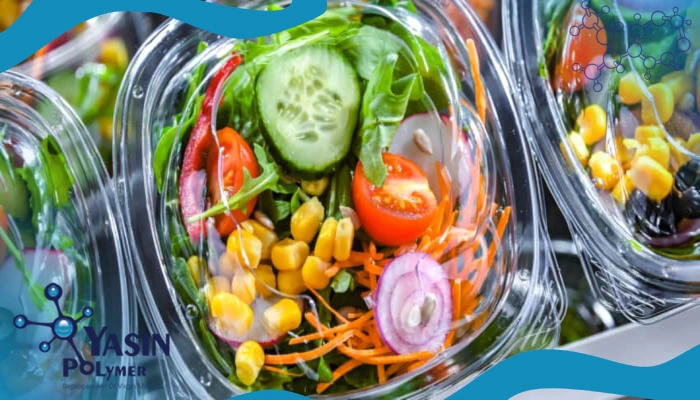
The adaptability of Polystyrene granule is one of its greatest strengths. Recycled GPPS is exceptionally versatile, finding its way into everything from high-end cosmetic packaging to secondary food containers and electronic casings. Its inherent rigidity makes it the material of choice for “clam-shell” packaging, which protects delicate items during transit without adding significant weight.
In addition to standard GPPS, the role of Recycled EPS Granule cannot be overlooked. By transforming expanded polystyrene back into a dense granule form, we create a material that can be blended or used in specialized molding processes to create durable, shock-absorbent packaging. This versatility allows manufacturers to simplify their procurement by using a single, reliable supplier for multiple product lines.
Table: Performance Metrics of Recycled Polystyrene
| Parameter | Recycled GPPS Granule | Recycled EPS Granule (Processed) | Industry Standard |
| Clarity | High / Transparent | Opaque / Translucent | High Transparency |
| Rigidity | Very High | Moderate | High |
| MFI (g/10min) | 8.0 – 12.0 | 5.0 – 9.0 | 7.0 – 15.0 |
| Typical Use | Jewelry Boxes, Trays | Protective Frames, Hangers | General Packaging |
-
Meeting Global Standards and Consumer Demand
Navigating the Future of Green Regulations
The global regulatory landscape is shifting toward mandatory recycled content. Countries in the EU and North America are already implementing “Plastic Taxes” on packaging that contains less than 30% recycled material. By integrating Recycled GPPS Granule today, manufacturers are future-proofing their businesses against upcoming legislation in the Middle East and beyond. Sourcing your Polystyrene granule Iran from a forward-thinking supplier like Yasin Polymer ensures you stay ahead of the curve.
Consumer behavior is the final, and perhaps most powerful, driver. Today’s shoppers are well-informed; they look for recycling symbols and “made from recycled content” labels. Packaging is the first point of contact between a brand and a consumer. Using Polystyrene granule from recycled sources allows brands to tell a story of sustainability, building trust and loyalty with a growing demographic of environmentally conscious buyers.
Enhancing Export Potential
For Iranian manufacturers looking to export, using recycled materials is a key differentiator. It demonstrates a commitment to international quality and environmental standards, making your products more attractive to global distributors who prioritize sustainability. Yasin Polymer provides the documentation and quality assurance needed to compete on this global stage.

Technical Specifications and Quality Control at Yasin Polymer
Ensuring Purity in Every Batch
The success of using Recycled GPPS Granule depends entirely on the purity of the feedstock. At Yasin Polymer, we employ a multi-stage cleaning and sorting process. This removes any contaminants that could affect the transparency or strength of the Polystyrene granule. Our lab technicians monitor the chemical composition to ensure that each batch of Polystyrene granule Iran performs consistently, session after session.
Conclusion: Partner with Yasin Polymer for a Greener Future
The transition to Recycled GPPS Granule is more than just a cost-saving measure; it is a strategic evolution toward a more sustainable and resilient manufacturing model. By leveraging the high-quality Polystyrene granule Iran provided by Yasin Polymer, you can achieve the perfect balance of clarity, strength, and environmental responsibility.
Ready to transform your packaging production? Contact the experts at Yasin Polymer today. Whether you need a bulk supply of Recycled EPS Granule or a custom-grade Polystyrene granule, we have the technical expertise to support your goals. Let’s build a circular future together.
Frequently Asked Questions (FAQ)
1. How does the MFI of Recycled GPPS Granule compare to virgin resin?
We calibrate our Recycled GPPS Granule to match standard virgin grades, typically ranging from 8 to 12 g/10min, ensuring it is suitable for most injection molding applications.
2. Is Recycled EPS Granule the same as GPPS?
No, but they are related. Recycled EPS Granule is derived from expanded foam. Once densified and pelletized, it can be used for similar applications as GPPS but often has slightly different impact resistance properties.
3. Can I mix recycled and virgin Polystyrene granule?
Absolutely. Many manufacturers start with a blend (e.g., 30% recycled / 70% virgin) to meet both cost goals and specific aesthetic requirements without altering their existing production setups.
4. Can Recycled GPPS be used for thin-walled packaging?
Yes. Because Polystyrene granule has naturally high rigidity, it is one of the best materials for thin-wall injection molding (TWIM). Our recycled grades maintain a high enough modulus of elasticity to ensure that even thin containers remain stiff and do not collapse under pressure, which is vital for stacking and logistics in the packaging industry.
5. How does sourcing from Yasin Polymer help in reducing the “Plastic Tax”?
Many international markets now impose taxes on packaging that does not contain a minimum percentage of recycled content. By integrating our Recycled GPPS Granule into your mix, you can officially document the use of “Post-Industrial” or “Post-Consumer” recycled material. This not only lowers your tax burden in export markets but also positions your brand as a leader in the green movement within the Polystyrene granule Iran market.