Recycled GPPS Vortex: Swirling Secrets of Core & Creation
2025-10-21
How GPPS Granules Are Revolutionizing the Plastics Industry
2025-10-29
How Recycled EPS Granules Reduce Costs and Environmental Impact
Expanded Polystyrene (EPS) is a lightweight, versatile material widely used in packaging, insulation, and consumer products. However, its durability becomes a double-edged sword, as discarded EPS can persist in landfills for decades, contributing to environmental pollution and waste management challenges. Recycling EPS into granules not only mitigates these environmental concerns but also offers significant economic advantages, including reduced raw material costs and energy savings. By transforming waste into reusable granules, industries can support sustainability goals while maintaining performance standards. Discover how turning EPS waste into valuable granules creates a win-win for both businesses and the planet.
Introduction to EPS and Its Environmental Challenges
However, EPS poses a significant environmental challenge. Globally, millions of tons of EPS waste are generated each year. Due to its resistance to degradation, EPS can take up to 500 years to break down naturally, contributing to long-term landfill accumulation and environmental pollution.
Traditional disposal methods have serious limitations:
- Landfills: EPS occupies substantial space without biodegrading, putting pressure on waste management infrastructure.
- Incineration: Burning EPS releases toxic gases and contributes to air pollution.
- Marine Pollution: Lightweight EPS easily travels through waterways, harming marine life and ecosystems.
Addressing these challenges highlights the urgent need for recycling EPS into granules, turning environmental burdens into valuable resources while supporting sustainable industrial practices.

Benefits of Recycling EPS Granules
Recycling EPS granules offers a combination of environmental and economic advantages, making it a key strategy for sustainable manufacturing.
Environmental Advantages
- Reduction in Landfill Waste and Marine Pollution: Recycling diverts EPS from landfills and prevents lightweight foam from entering waterways, protecting ecosystems.
- Resource Conservation: By reusing EPS granules, the need for virgin raw materials decreases, conserving petroleum-based resources.
- Decrease in Carbon Footprint and Greenhouse Gas Emissions: Recycling consumes less energy compared to producing new EPS, reducing overall emissions and supporting climate goals.
Economic Benefits for Businesses
- Cost Savings on Raw Material Procurement: Recycled EPS granules are more cost-effective than purchasing virgin polymer, directly lowering production expenses.
- Reduced Waste Management and Disposal Costs: Minimizing landfill disposal and incineration requirements leads to operational savings.
- Competitive Advantage Through Sustainable Practices: Companies adopting recycled EPS can market eco-friendly products, enhancing brand reputation and meeting consumer demand for sustainability.
By leveraging these benefits, industries can achieve a win-win scenario: reducing environmental impact while optimizing operational costs, showcasing the strategic value of recycled EPS granules.

The Recycling Process of EPS Granules
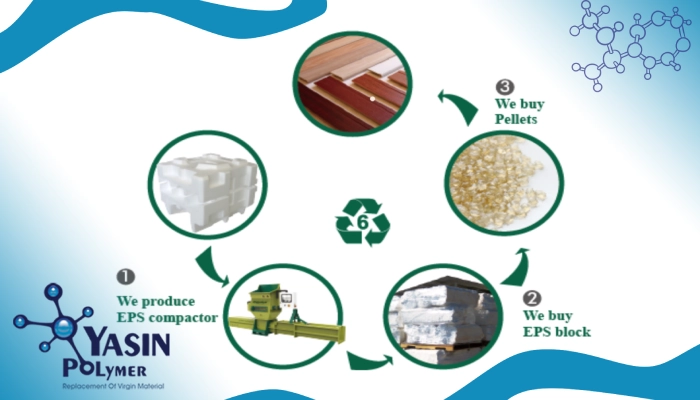
Recycling EPS granules involves a systematic process that transforms waste into valuable, reusable materials. The process can be divided into three main stages:
Collection and Sorting
- Collection Methods: EPS is collected from manufacturers, retailers, and consumers through dedicated recycling programs, drop-off centers, and industrial take-back initiatives.
- Sorting and Contaminant Removal: EPS is separated from other waste streams, and impurities such as food residues, adhesives, or mixed plastics are removed to ensure high-quality recycled material.
Densification and Pelletizing
- Compacting EPS: EPS is lightweight and bulky; densification reduces its volume, making storage and transportation more efficient.
- Pelletizing: The compacted material is processed into uniform granules or pellets, ready for reuse in manufacturing.
Final Applications of Recycled EPS
- Construction Materials: Used in insulation boards, lightweight concrete, and building panels, offering both thermal efficiency and cost savings.
- Packaging Products: EPS granules can be molded into protective packaging, trays, and containers, maintaining durability while reducing raw material costs.
- Insulation Boards: High-performance insulation with recycled EPS granules preserves technical properties such as rigidity, thermal resistance, and long-term stability.
By following this process, EPS waste is converted into practical, cost-effective products while supporting sustainability goals, demonstrating the real-world impact of recycled EPS granules.

Technological Innovations in EPS Recycling
Advancements in EPS recycling are reshaping the way industries handle waste, making the process more efficient, cost-effective, and environmentally friendly.
Modern recycling technologies focus on improving the quality and usability of recycled EPS. New methods for cleaning, densifying, and granulating EPS ensure that contaminants are removed and the material maintains its structural integrity. These improvements not only enhance the quality of the granules but also reduce production costs, making recycled EPS a competitive alternative to virgin material.
Automation plays a critical role in increasing efficiency. Automated collection, sorting, and processing systems streamline operations, reduce manual labor, and accelerate throughput. By integrating robotics and AI-powered systems, processing times are shortened, and errors due to contamination or misclassification are minimized.
Together, these innovations enable industries to produce high-quality EPS granules faster and at lower costs, reinforcing both the environmental and economic advantages of recycling EPS.

Case Studies: Successful EPS Recycling Initiatives
Real-world examples demonstrate the tangible benefits of EPS recycling and provide valuable lessons for businesses and governments aiming to adopt sustainable practices.
- Industry Examples and Outcomes
- Company Case: A European packaging manufacturer implemented an EPS granule recycling program, diverting over 500 tons of EPS waste from landfills annually. The initiative reduced raw material costs by approximately 25%, while maintaining product quality for packaging applications.
- City Initiative: In a U.S. city-wide EPS collection program, municipal waste EPS was converted into granules used in insulation boards. This effort prevented hundreds of tons of EPS from entering landfills and reduced waste management costs significantly.
- Lessons Learned and Best Practices
- Sorting is Key: Effective pre-collection sorting ensures high-quality recycled EPS granules.
- Collaboration Matters: Partnerships between manufacturers, recyclers, and municipalities enhance program efficiency and reach.
- Process Optimization: Regular monitoring and process adjustments maximize material recovery and reduce costs.
- Recommendations: Other businesses and governments should invest in automated collection systems, maintain strict quality control, and promote public awareness to encourage EPS recycling adoption.
These case studies illustrate that, when implemented strategically, EPS recycling initiatives deliver measurable environmental benefits and financial savings, serving as models for sustainable industrial practices.

Challenges in EPS Recycling and Proposed Solutions
Recycling EPS presents several challenges that can impact efficiency, cost, and environmental benefits. Understanding these issues is key to developing effective strategies.
Contamination and Quality Issues
- Mixed materials, food residues, and low-quality EPS can compromise the integrity of recycled granules.
- Contaminated EPS requires additional cleaning and processing, increasing operational costs and reducing overall efficiency.
- Maintaining consistent quality is essential for ensuring that recycled EPS meets industry standards for construction, packaging, and insulation products.
Infrastructure and Policy Challenges
- Many regions lack sufficient recycling facilities and collection networks, limiting the volume of EPS that can be effectively recycled.
- Inadequate regulations, standards, or incentives discourage businesses from investing in EPS recycling initiatives.
- Without proper infrastructure and policy support, even well-designed recycling programs struggle to achieve scalability.
Proposed Solutions and Innovations
- Technological Solutions: Advanced cleaning, densification, and granulation methods improve granule quality and reduce processing costs. Automation in collection and sorting enhances throughput and efficiency.
- Policy Recommendations: Governments can introduce incentives, mandatory recycling standards, and public awareness campaigns to promote EPS recycling.
- Industry Collaboration: Partnerships between manufacturers, recyclers, and municipalities can create efficient collection networks and share best practices, maximizing material recovery.
By addressing these challenges through technology, policy, and collaboration, EPS recycling can become a more efficient, cost-effective, and environmentally impactful solution.
Future Trends in EPS Recycling
The future of EPS recycling is shaped by emerging technologies and evolving policy frameworks, both of which aim to enhance sustainability, reduce costs, and expand global adoption. The table below summarizes key trends and their potential impact:
| Trend Category | Emerging Developments | Potential Impact |
| Emerging Technologies | – Chemical recycling methods that break down EPS into monomers for near-virgin quality polymer- Bio-based recycling using enzymes or microbes to degrade EPS | – Higher quality recycled EPS- Reduced environmental footprint- Potential cost reduction in processing and raw material sourcing |
| Policy Developments & Industry Movements | – Stricter government regulations on plastic waste management- Corporate sustainability commitments and circular economy initiatives- Incentives for adopting recycled EPS in manufacturing | – Increased adoption of EPS recycling programs globally- Standardization of recycled material quality- Encouragement of public-private partnerships for efficient collection and processing |
These trends indicate that EPS recycling is moving toward more efficient, sustainable, and widely adopted practices, supporting both environmental goals and economic advantages for businesses worldwide.
Conclusion
Recycling Expanded Polystyrene (EPS) into granules offers a practical and sustainable solution to one of the plastics industry’s most persistent challenges—waste and environmental pollution. By converting post-consumer or industrial EPS into reusable granules, manufacturers achieve a dual advantage: lowering raw material and waste management costs while contributing to circular economy objectives.
EPS recycling not only reduces landfill accumulation and carbon emissions, but also enables the production of high-quality packaging, insulation, and construction materials at a fraction of the cost of virgin EPS. Modern technological innovations—such as automation, AI-based sorting, and chemical depolymerization—further improve recycling efficiency and product consistency.
While challenges like contamination and limited recycling infrastructure still exist, collaboration between governments, industries, and recyclers is paving the way for scalable and eco-friendly solutions. Looking ahead, EPS recycling is set to become a cornerstone of sustainable manufacturing, offering both economic and environmental value for future generations.
Frequently Asked Questions (FAQ)
- What are the main benefits of recycling EPS granules?
Recycling EPS reduces landfill waste, lowers production costs, conserves petroleum-based resources, and cuts greenhouse gas emissions. It helps companies meet sustainability goals while maintaining material performance and quality. - How are EPS granules recycled into usable materials?
The process involves collecting and cleaning EPS waste, compacting it through densification, and pelletizing it into uniform granules. These granules can then be reused in construction panels, packaging, and insulation boards. - What are the biggest challenges in EPS recycling?
Major obstacles include contamination from food or mixed plastics, lack of recycling facilities, and insufficient policy incentives. However, emerging technologies and stronger regulations are improving efficiency and adoption rates. - What is the future outlook for EPS recycling?
Future trends point toward chemical and bio-based recycling, advanced automation, and wider regulatory support. As industries embrace circular economy principles, EPS recycling will continue to expand, driving cost savings and environmental sustainability worldwide.