Styrofoam vs. Polystyrene: The Ultimate Guide to Properties, Differences, and Industrial Uses
2026-02-17
What is GPPS Material?
2026-02-24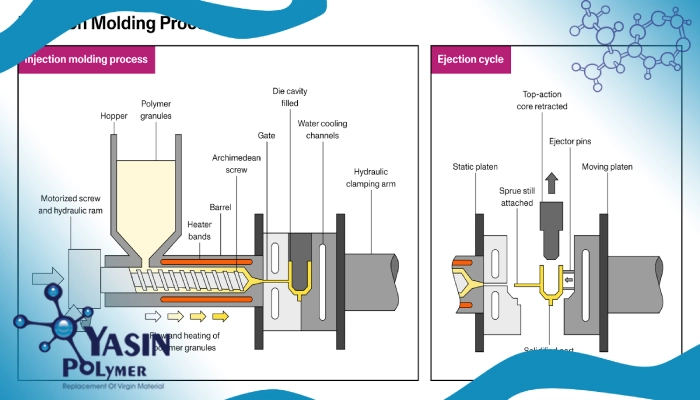
Can Polystyrene Get Wet?
In the global industrial landscape, the question “can polystyrene get wet?” is more than a simple curiosity; it is a critical engineering inquiry. Whether you are an architect specifying insulation for a high-rise, a medical device manufacturer, or a global trader in Polystyrene granule Iran, understanding the interaction between water and polymer chains is vital for long-term product success.
In this exhaustive guide, Yasin Polymer—a leader in the distribution and export of petrochemical materials—provides a 360-degree analysis of moisture resistance in GPPS, the high-performance profile of Iranian polymers, and the sustainable future of Recycled GPPS Granule.
The Chemical Anatomy: Why Polystyrene is Naturally Hydrophobic
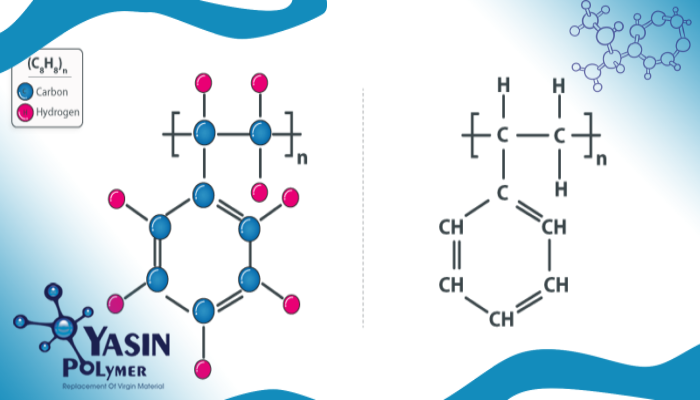
At its core, Polystyrene is a long-chain hydrocarbon. Its molecular structure consists of a carbon backbone with a phenyl group (benzene ring) attached to every other carbon atom.
The Principle of Non-Polarity
Water () is a polar molecule, characterized by its positive and negative poles. Polystyrene, however, is non-polar. In the world of chemistry, “like dissolves like.” Because water cannot find a polar “hook” to latch onto within a Polystyrene granule, it is naturally repelled. This inherent hydrophobicity is the reason why GPPS (General Purpose Polystyrene) remains the gold standard for applications that require contact with water, such as laboratory vials and food packaging.
GPPS vs. EPS: The Impact of Physical Form on Water Retention
While the base material is waterproof, the form of the plastic dictates how it manages liquid exposure.
General Purpose Polystyrene (GPPS)
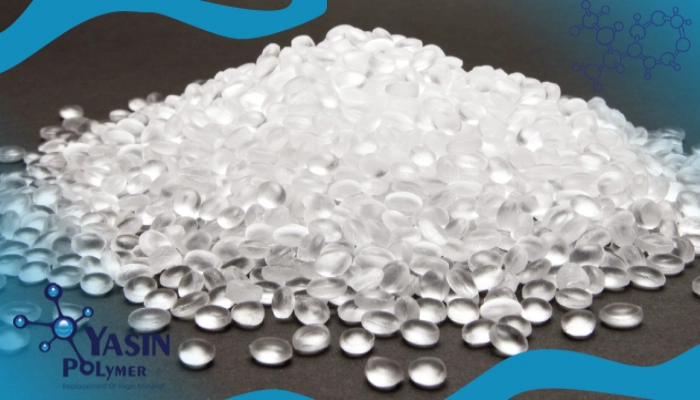
GPPS is a solid, glass-clear thermoplastic. Because it is non-porous and high-density, it is physically impossible for water to penetrate the material. When sourcing Polystyrene granule Iran for high-clarity injection molding, you are guaranteed a product that provides a 100% moisture barrier.
Expanded Polystyrene (EPS)
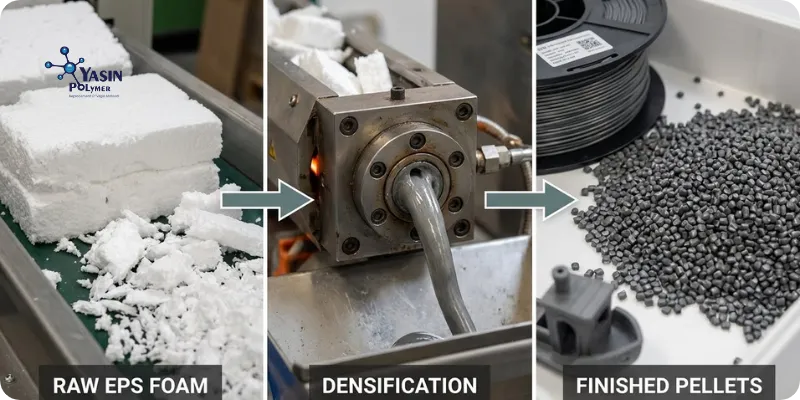
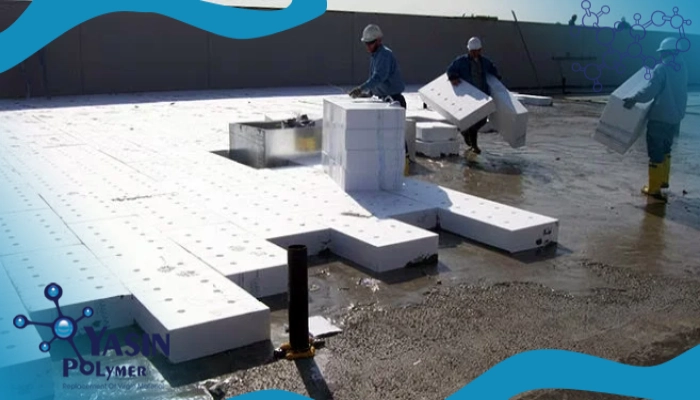
EPS is created by expanding Polystyrene granule into a cellular structure. While each individual cell is waterproof, the microscopic channels between the beads can trap water via capillary action. This is why Recycled EPS Granule is often re-processed into solid dense forms to restore total impermeability for industrial usage.
Technical Comparison: Moisture Absorption Rates
| Polymer Type | ASTM D570 (24h Immersion) | Permeability Coefficient | Best Use Case |
| Virgin GPPS | < 0.04% | Extremely Low | Petri Dishes, Optical Trays |
| Polystyrene Granule Iran | 0.05% | Low | Premium Export Goods |
| Recycled GPPS Granule | 0.08% – 0.12% | Moderate-Low | Hangers, Toys, Frames |
| Recycled EPS Granule | 0.20% – 0.40% | Moderate | Heavy Molding, Concrete Fill |
Deep-Dive: Troubleshooting Injection Molding Defects
Even though polystyrene is waterproof, moisture can ruin your production. At Yasin Polymer, we help our clients resolve “Splay” and “Silver Streaks”—the two most common defects caused by humidity.
Resolving Silver Streaks and Splay
When Polystyrene granule Iran is processed, any surface moisture turns to steam in the barrel. This steam is then pushed into the mold cavity, creating visible streaks.
- Step 1: The Drying Protocol: Before using Recycled GPPS Granule, ensure it is dried at 70°C to 80°C for a minimum of 2 hours. Desiccant dryers are preferred over hot air dryers for consistent results.
- Step 2: Venting Maintenance: If splay persists, check the mold vents. Trapped gas—whether from moisture or material degradation—must have an escape path.
- Step 3: Back Pressure Adjustment: Increasing back pressure can help compress the melt and force out trapped air or volatile gases before they reach the cavity.
Eliminating Bubbles and Voids
Bubbles often occur in thicker sections of a part. While they look like air, they are often vacuum voids caused by shrinkage or trapped steam. Reducing the melt temperature of your Polystyrene granule and increasing the holding pressure can mitigate these issues.
The Processing Challenge: Surface Moisture in Granules
A common misconception is that because the finished part is waterproof, the Polystyrene granule does not need care. In reality, surface moisture is a major hurdle in manufacturing.
The “Splay” Phenomenon
If Polystyrene granule Iran is stored in humid environments without airtight protection, water molecules will adhere to the surface of the pellets. During the high-heat phase of injection molding:
- The surface water turns to steam inside the barrel.
- This steam creates silver streaks known as “splay” on the surface of the molded part.
- This is especially problematic for GPPS, where clarity is the primary selling point.
Yasin Polymer’s Recommendation: Always pre-dry your Recycled GPPS Granule or virgin resins at 70°C (158°F) for 2–3 hours if your facility is in a high-humidity region.
Polystyrene Granule Iran: A Strategic Choice for Global Exporters
Iran’s petrochemical industry is one of the most advanced globally, particularly in the production of styrene monomers. Polystyrene granule Iran is favored in international markets due to its high purity and consistent melt flow index (MFI).
Resistance to Saltwater
In marine shipping, containers are often exposed to high salinity and humidity. Unlike metal or lower-grade plastics, GPPS and Polystyrene granule sourced from Iran are chemically inert to salt, ensuring that products arrive at their destination without structural degradation or “clouding.”
Industrial Case Study: Marine Infrastructure and Buoyancy
A prime application for our Recycled EPS Granule is in the production of floating docks and sea buoys.
- Environmental Stress: Constant submersion, UV exposure, and wave impact.
- The PS Advantage: While wood rots and steel rusts, the polystyrene core remains 100% buoyant. Even if the outer shell is punctured, the Polystyrene granule structure prevents water from soaking into the core, maintaining the structure’s life for decades.
Advanced Polymer Physics: Diffusion Coefficients and WVTR
For high-level engineering, the answer to “can polystyrene get wet” is found in the Water Vapor Transmission Rate (WVTR).
Polystyrene has a diffusion coefficient significantly lower than that of polyamides (Nylon) or polycarbonates. At Yasin Polymer, we analyze the WVTR of our Recycled GPPS Granule to ensure it meets the stringent requirements for moisture-sensitive electronics packaging, where even a few micrograms of water can cause a short circuit.
The Circular Economy: Recycled GPPS Granule and Recycled EPS Granule
Because polystyrene is so effectively waterproof, it is a persistent material in nature. This makes the recycling efforts of Yasin Polymer vital.
Sustainability through Recycling
By converting post-industrial and post-consumer waste into Recycled GPPS Granule, we take advantage of the polymer’s durability. Because the polymer doesn’t “absorb” the water or the dirt into its matrix, it can be cleaned and pelletized back into a high-quality resin. Utilizing Recycled EPS Granule in new construction projects can reduce total carbon emissions by up to 55% compared to virgin plastic production.
Conclusion: Engineering the Future with Yasin Polymer
The definitive answer to “can polystyrene get wet” is that while the surface can hold moisture, the material itself is an impenetrable fortress against liquid water. Whether you are seeking the crystal-clear properties of GPPS, the high-volume reliability of Polystyrene granule Iran, or the sustainable edge of Recycled GPPS Granule, polystyrene is your best defense against moisture.
Yasin Polymer is dedicated to providing the raw materials that fuel your innovation. From marine engineering to medical packaging, we ensure your polymers are dry, pure, and ready for production.
Frequently Asked Questions (FAQ)
- Can I use Polystyrene in boiling water?
While it is waterproof, GPPS has a heat deflection temperature (HDT) of around 70°C–90°C. Boiling water won’t “wet” it, but it may cause the plastic to soften or warp.
- Does Polystyrene granule Iran contain additives to repel water?
No, the water-repellent nature is a natural property of the styrene molecule. However, Yasin Polymer can provide grades with added UV stabilizers for outdoor waterproof applications.
- Is Recycled GPPS Granule as clear as virgin material?
Recycling may introduce a very slight tint, but the moisture resistance remains identical to virgin Polystyrene granule.
- Why does Polystyrene float?
Its density (approx. 1.05 g/cm³ for solid GPPS and much lower for EPS) combined with its hydrophobic nature prevents it from sinking or absorbing water that would increase its weight.