How to Ensure Consistent Quality in Recycled Polystyrene
2025-12-10
GPPS vs HIPS: A Technical Comparison for Manufacturers
2025-12-31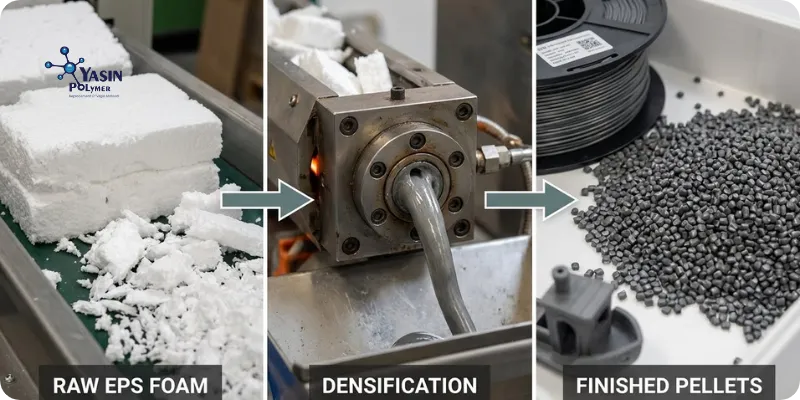
How 3D Printing is Using GPPS and EPS Granules
3D printing with GPPS and EPS granules utilizes a technology known as Direct Pellet Extrusion or FGF (Fused Granular Fabrication). Unlike standard desktop printers that rely on expensive spools of filament, this industrial method melts raw plastic pellets directly inside the extruder. This is the exact same raw material used in large-scale injection molding factories, allowing you to bypass the filament manufacturing process entirely. By adopting this method, manufacturers can produce massive parts using virgin industrial beads (GPPS) or recycled foam waste (EPS) at a fraction of the cost. This isn’t just an alternative printing method; it is the industrial secret to reducing material costs by up to 90%.
Key Benefits of Granular Printing:
-
Massive Cost Reduction: Eliminates the premium markup of converting plastic into filament wire.
-
Industrial Scale: Designed specifically for printing large-format parts like furniture and molds.
-
Material Versatility: Enables the use of pure raw materials or 100% recycled waste streams.
What is Granule 3D Printing?
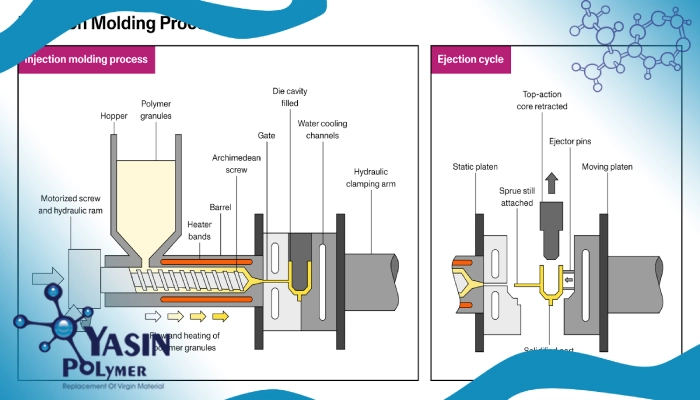
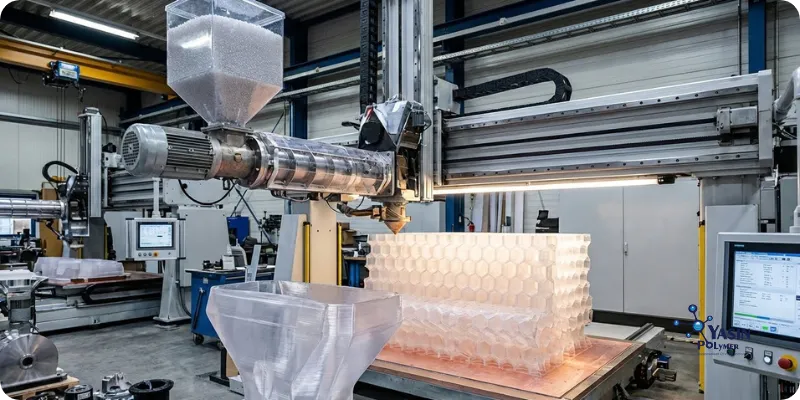
Granule 3D printing, technically referred to as Fused Granular Fabrication (FGF), fundamentally changes the mechanics of extrusion. While standard FDM printers use gears to pull a solid wire into a hot end, an FGF system operates like a miniaturized industrial extruder. It uses a hopper to feed raw plastic pellets into a heated barrel, where a rotating screw extruder shears and melts the plastic before pushing it through a nozzle. This technology removes the “middleman” of filament production, giving users direct access to the same raw supply chain that major plastics manufacturers use.
How the Mechanism Differs:
-
Feeding System: Uses a gravity-fed hopper filled with sacks of beads instead of spools.
-
Melting Physics: Relies on friction and heat generated by a rotating screw (shear heat) rather than just a heating block.
-
Flow Rate: Capable of pushing significantly more material per hour, enabling large-nozzle printing (1mm to 8mm+).
Differences Between GPPS and EPS Granules
Chemically, both materials are Polystyrene (PS), but their physical state represents a massive difference in how they must be handled before printing. You cannot treat them as interchangeable inputs without processing.
Comparison of Material States:
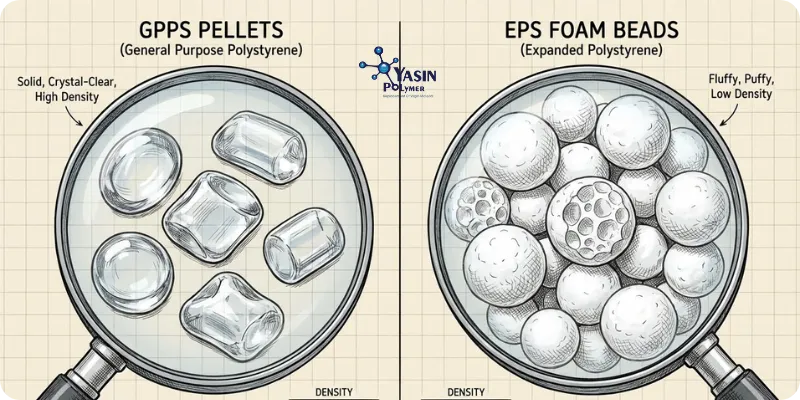
| Feature | GPPS (General Purpose Polystyrene) | EPS (Expanded Polystyrene) |
| Physical State | Solid, crystal-clear, hard pellets (like uncooked rice). | White, puffy, lightweight foam beads (98% air). |
| Density | High density (Solid plastic). | Extremely low density (Mostly air volume). |
| Print Readiness | Ready to print. Can be loaded directly into the hopper. | Not printable directly. Must be densified first. |
| Final Output | Rigid, brittle, and glass-like parts. | Rigid, solid parts (once the air is removed). |
Key Takeaway: Think of EPS not as a solid material, but as a “volume state.” To print with EPS, you must first crush and melt the air out of it to return it to a solid state similar to GPPS.
How to Prepare EPS Granules for 3D Printing?
You cannot pour raw, puffy Styrofoam beads into a 3D printer; the air content is too high for the screw extruder to generate pressure. To turn waste foam into printable plastic, you must perform a process called densification. This reduces the volume of the material significantly—converting approximately 50 truckloads of foam into just 1 truckload of solid pellets.
The Densification Workflow:
-
Shredding: The large EPS foam blocks or packaging waste are broken down into smaller chunks to ensure they feed evenly into the machinery.
-
Densifying (Melting): The shredded foam is heated until the air pockets collapse. The material transforms from a foam into a hot, sticky “goo.”
-
Pelletizing: This molten plastic is extruded into a long strand, cooled, and chopped into small, solid Recycled EPS (rEPS) pellets.
Note: Once this process is complete, the resulting rEPS pellets act almost exactly like GPPS in the printer. You have effectively closed the recycling loop.
Can You Print with GPPS Granules?
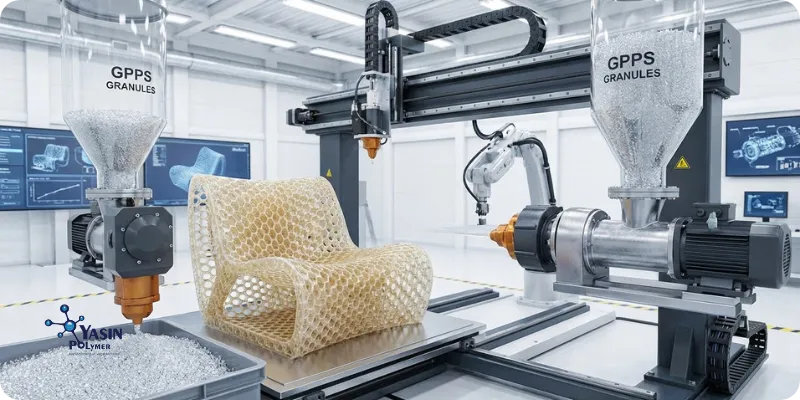
Yes, GPPS is highly printable via direct pellet extrusion, provided you manage its unique thermal properties. It is valued for its incredible transparency; when printed with large layer heights and the correct temperature, the results can look like clear glass or ice. However, success depends on selecting a specific grade of GPPS with the correct Melt Flow Index (MFI)—it needs to flow easily enough to extrude but be viscous enough to hold its shape.
Pros and Cons of GPPS Printing:
-
The “Clean Burn” Advantage: GPPS is the gold standard for Investment Casting (Lost Foam). It burns away completely without leaving ash or residue, making it perfect for sacrificial molds.
-
Visual Appeal: Offers high optical clarity and a glossy surface finish.
-
Mechanical Weakness: It is extremely brittle. Parts will crack or shatter if dropped or subjected to impact. It should never be used for functional snap-fits or flexible hinges.

Advantages of Using Granules Over Filament
The shift from filament to granules is driven almost entirely by business logic and production scalability. When moving from prototyping to production, the “10x Rule” often applies: granules are often 10 times cheaper and allow for printing speeds 10 times faster than standard methods.
Why Industries Are Switching:
-
Drastic Cost Savings: Raw pellets typically cost $1–$2 per kg, whereas spools of filament cost $20–$30 per kg. For a 50kg furniture piece, this is a difference of thousands of dollars.
-
High Flow Rates: Screw extruders can output kilograms of material per hour, reducing print times for massive objects from days to hours.
-
Material Purity: Filament often contains additives to make the wire flexible. Granules allow you to print with 100% pure resin, exactly as the chemical engineers designed it.
-
True Sustainability: It unlocks the ability to use 100% recycled regrind without needing a filament production line.

Common Challenges with Polystyrene Granules
While the cost benefits are high, printing with PS requires strict thermal management. This is an industrial process, and treating it like a desktop hobby printer will lead to failure. If you control the temperature, you solve 90% of the issues.
Troubleshooting the Main Issues:
-
Severe Warping: Polystyrene has a high shrinkage rate as it cools. You must use a heated chamber and a heated bed to prevent the part from curling off the build plate.
-
Styrene Fumes: Melting PS releases distinct chemical fumes. Proper ventilation and air filtration are mandatory for operator safety.
-
Bed Adhesion: Getting the first layer to stick is difficult. Use specialized adhesives (like dissolved Styrofoam glue) or large “brims” to anchor the part down.
Industrial Applications of PS Granules
Because of its low cost and specific burning properties, Polystyrene (both virgin GPPS and recycled EPS) has found a home in high-value industrial sectors. It is rarely used for final consumer gadgets, but rather for the “tools” that make them.
Where It Is Used:
-
Investment Casting (Lost Foam): Printing complex patterns that are coated in ceramic and vaporized by molten metal to create engine parts or artistic sculptures.
-
Sustainable Furniture: Designers print large chairs, lamps, and tables using recycled EPS, turning waste into high-end decor.
-
Large-Scale Prototyping: Automotive and aerospace companies use it for non-functional “fit and check” models because the material is cheap enough to print massive 1:1 scale mockups.
-
Set Design & Props: Movie sets and theme parks use it to build lightweight, disposable scenery structures.
Future of Sustainable 3D Printing
The future of manufacturing is not linear; it is circular. Direct pellet extrusion is the missing link that allows the 3D printer to act not just as a creator, but as a recycler. By utilizing GPPS and EPS granules, we are moving away from the “buy, print, trash” model toward a closed-loop system where local waste (packaging foam) is shredded and immediately reborn as useful products (furniture or molds). This technology transforms a global waste problem into a valuable local manufacturing resource.