How 3D Printing is Using GPPS and EPS Granules
2025-12-16
Recycled GPPS Granule Applications
2026-01-01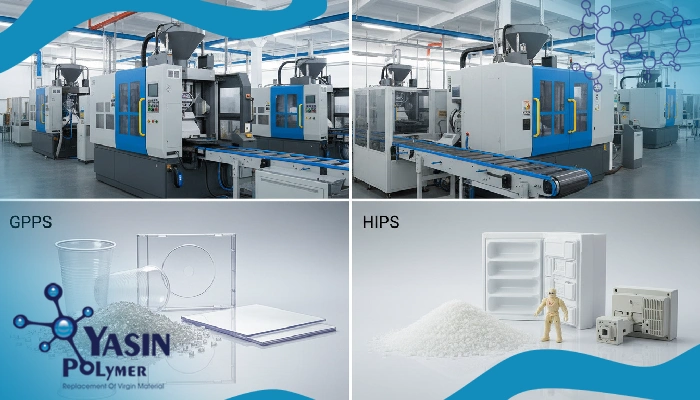
GPPS vs HIPS: A Technical Comparison for Manufacturers
In the world of thermoplastics, material selection is arguably the most critical step in the product development cycle. For injection molding and extrusion professionals, the choice often comes down to two dominant members of the styrene family: General Purpose Polystyrene (GPPS) and High Impact Polystyrene (HIPS).
While they share a chemical lineage, their physical properties and suitable applications diverge significantly. For manufacturers sourcing raw materials—whether looking for local suppliers or importing Polystyrene granule Iran—understanding the technical distinctions between these two polymers is vital for production efficiency and product failure prevention.
This guide provides a detailed technical comparison of GPPS vs HIPS, analyzing their chemistry, mechanical properties, optical characteristics, and cost implications to help you choose the right resin for your project.
The Fundamental Difference: Chemistry an Composition
To understand why these materials behave differently in the mold, we must first look at their chemical structure.
General Purpose Polystyrene (GPPS) is a homo polymer. It is formed by the polymerization of styrene monomers alone. Structurally, it is an amorphous polymer, which gives it its defining characteristics: exceptional clarity and high stiffness. However, this rigid structure lacks internal mechanisms to absorb energy, making it inherently brittle.
High Impact Polystyrene (HIPS), on the other hand, is a modified graft copolymer. During the polymerization process, polybutadiene rubber (typically 5% to 10%) is dissolved in the styrene monomer. This creates a two-phase system where microscopic rubber particles are dispersed throughout the polystyrene matrix.
The difference in GPPS vs HIPS chemistry is simple but transformative: the rubber phase in HIPS acts as a stress-reliever, stopping crack propagation and absorbing impact energy.

Key Property Differences (GPPS vs. HIPS)
When evaluating GPPS vs HIPS for a specific part, engineers typically focus on three main performance metrics: clarity, impact strength, and stiffness.
Optical Clarity and Transparency
This is the most visible differentiator.
- GPPS: Offers glass-like transparency with light transmission rates often exceeding 90%. It is ideal for applications where seeing the contents is essential.
- HIPS: Is naturally opaque or translucent. The rubber particles scatter light, resulting in a milky white or off-white natural color. While HIPS can be colored easily, it cannot be made transparent.
Impact Strength and Brittleness
The “Impact” in High Impact Polystyrene is its primary selling point.
- GPPS: Is brittle. Upon impact, it tends to shatter into sharp fragments. It has low elongation at break, meaning it snaps rather than stretches.
- HIPS: Is ductile. The rubber modification allows the material to yield under stress. HIPS has significantly higher impact strength (Izod impact test) and is resistant to cracking, making it suitable for parts that may be dropped or assembled with snap-fits.

Tensile Strength and Stiffness
There is a trade-off for toughness.
- GPPS: Has higher tensile strength and flexural modulus. It is a rigid, hard material that resists deformation under load better than HIPS, provided the load is not an impact shock.
- HIPS: Is more flexible and “softer” due to the rubber content. It has a lower tensile strength compared to GPPS.
Comprehensive Comparison Table (At a Glance)
| Property | General Purpose Polystyrene (GPPS) | High Impact Polystyrene (HIPS) |
|---|---|---|
| Structure | Amorphous Homo polymer | Rubber-Modified Copolymer |
| Clarity | Transparent (Crystal Clear) | Opaque (White / Translucent) |
| Impact Strength | Low (Brittle) | High (Tough) |
| Tensile Strength | High (Rigid) | Medium (Flexible) |
| Surface Finish | High Gloss | Matte / Satin |
| Molding Shrinkage | 0.4% – 0.7% | 0.4% – 0.7% |
| Cost | Lower | Higher |
| FDA Compliance | Yes (Specific Grades) | Yes (Specific Grades) |
Application Scenarios: Which Material Fits Your Product?
The decision of GPPS vs HIPS is usually dictated by the end-use environment of the product.
When to Choose GPPS?
Select GPPS when aesthetics and clarity are the priority, and the product will not face mechanical abuse.
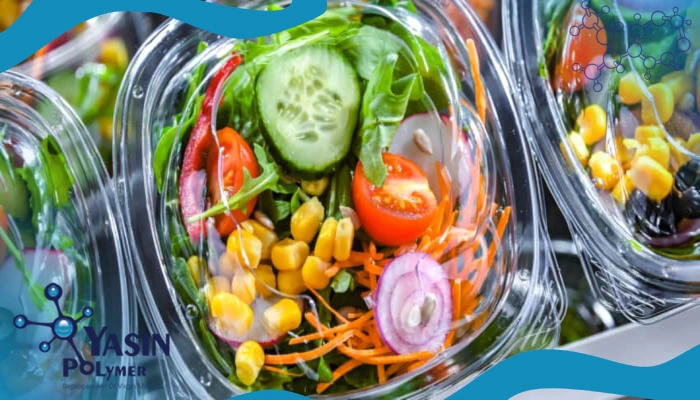
- Food Packaging: Bakery containers, rigid salad boxes, and egg cartons where product visibility drives sales.
- Laboratory Ware: Petri dishes, test tubes, and pipettes requiring visual inspection of fluids.
- CD/DVD Jewel Cases: The classic application requiring crystal clarity and rigidity.
- Disposable Items: Plastic cutlery and cups.
When to Choose HIPS?
Select HIPS when durability and toughness are required.
- Appliance Liners: The inner liners of refrigerators are almost exclusively vacuum-formed HIPS due to its resistance to cracking at low temperatures.
- Housings: Casings for TVs, computers, and smoke detectors.
- Toys and Models: Parts that need to withstand rough handling by children.
- Yogurt Cups: Unlike clear bakery boxes, yogurt cups need to be tough enough to withstand filling lines and transport without cracking.
Processing and Molding Considerations
For production managers, the GPPS vs HIPS debate also involves processing parameters. Both materials are easy to process, but there are nuances.
- Shrinkage: Both materials have low shrinkage rates, making them excellent for dimensionally stable parts. However, HIPS can sometimes exhibit slightly different shrinkage depending on the rubber orientation.
- Surface Finish: GPPS naturally produces a high-gloss, shiny finish. HIPS typically results in a matte or satin finish. If a glossy finish is required on a HIPS part, the mold must be highly polished, and processing temperatures optimized.
- Printing and Painting: HIPS generally offers a better substrate for printing and painting (e.g., silk screening on appliance housings) due to its surface texture and rubber modification.

Cost Analysis: Is GPPS Cheaper than HIPS?
In the current market, cost is a deciding factor. Generally, GPPS is cheaper than HIPS.
The production of HIPS involves the addition of polybutadiene rubber and a more complex polymerization process (grafting). Since rubber is more expensive than styrene monomer, HIPS resins command a premium over standard crystal grades.
However, density must also be considered. Since the densities of GPPS and HIPS are relatively similar (approx 1.04 – 1.05 g/cm³), the cost-per-part calculation largely follows the cost-per-kilogram of the raw material. For manufacturers producing high-volume disposable items, the lower cost of GPPS makes it the obvious choice unless impact resistance is strictly necessary.
Conclusion
The battle of GPPS vs HIPS is not about which material is “better,” but which is “right” for your specific application.
- Choose GPPS for clarity, rigidity, and cost-efficiency in non-durable goods.
- Choose HIPS for toughness, impact resistance, and opaque applications in durable goods.
Understanding these technical trade-offs ensures you optimize both your production budget and product performance.
Need Expert Material Advice?
Whether you need high-clarity crystal grades or impact-resistant compounds, sourcing the right material is crucial. At Yasin Polymer, we specialize in supplying top-tier resins. If you are looking to import or source Polystyrene granule Iran, contact our technical sales team today for a quote and specification sheets tailored to your machinery.
The main difference lies in their composition and optical properties. GPPS is a clear, brittle homopolymer, while HIPS is modified with rubber, making it opaque but significantly tougher and more impact-resistant. Yes, manufacturers often blend GPPS and HIPS. Adding GPPS to HIPS can increase stiffness and gloss while reducing cost, though it will lower the impact strength. Conversely, adding HIPS to GPPS can reduce brittleness, but the material will lose its transparency and become hazy. Yes, many grades of both GPPS and HIPS are FDA-compliant for food contact. GPPS is used for clear containers, while HIPS is widely used for dairy packaging (like yogurt cups) and disposable plates. Always check the specific material datasheet (TDS) for compliance. HIPS is generally considered superior for thermoforming and vacuum forming. Its rubber content gives it better melt strength and allows it to stretch into deep-draw molds without thinning excessively or tearing, which is why it is the standard for refrigerator liners.