How polystyrene granules are molded and shaped
2025-11-16
The Role of Styrene Monomer in GPPS Production
2025-11-22
Packaging and Transport Guidelines for EPS and GPPS
The primary goals for packaging and transporting EPS (Expanded Polystyrene) and GPPS (General Purpose Polystyrene) are to: 1) prevent product contamination from moisture, dust, and odors, and 2) manage safety risks, especially static electricity. While both are polystyrenes, their different physical forms EPS as light beads and GPPS as hard pellets—demand unique packaging and handling protocols. This guide provides the complete technical guidelines that manufacturers and logistics partners must follow to ensure product integrity and operational safety from the plant to the customer.
What are EPS and GPPS?
To establish a clear baseline, EPS (Expanded Polystyrene) is a lightweight cellular plastic material, most commonly handled as expandable beads or “pre-puffs.” In contrast, GPPS (General Purpose Polystyrene) is a solid, clear, and brittle polymer, typically in the form of hard pellets or granules. This table compares their properties as they relate to transport.
| Feature | EPS (Expanded Polystyrene) | GPPS (General Purpose Polystyrene) |
| Common Form | Low-density beads (pre-puffs) or expandable beads. | Solid pellets or granules. |
| Physical State | Solid, lightweight foam beads. | Solid, clear, brittle pellets. |
| Primary Risk | High static generation, dust, contamination, crushing. | Contamination, puncture risk from pellets, breakage. |
| Common Use | Insulation, food packaging, void fill. | Rigid packaging, consumer electronics, labware. |
General Polystyrene Packaging Principles
Before addressing the specific needs of EPS and GPPS, all packaging materials used for polystyrene must adhere to universal standards to protect product value. The primary requirement is that all materials are clean, dry, and chemically inert, ensuring no interaction with the polymer.
- Contamination-Free: All packaging (including bags, inner PE liners, octabins, and FIBCs) must be 100% clean, dry, and completely free from any previous cargo residue, dust, or oils.
- Moisture Protection: Packaging must be inherently water-resistant or include a moisture-proof barrier (like a PE liner) to prevent moisture absorption, which degrades product quality and processing performance.
- UV Protection: Opaque or UV-stabilized packaging is required for any shipment that may be exposed to sunlight during transit or temporary outdoor storage to prevent polymer degradation.
- Material Integrity: Only new, high-strength packaging materials, such as woven polypropylene for FIBCs or multi-layer bags, should be used to prevent tears, punctures, or leaks during handling.
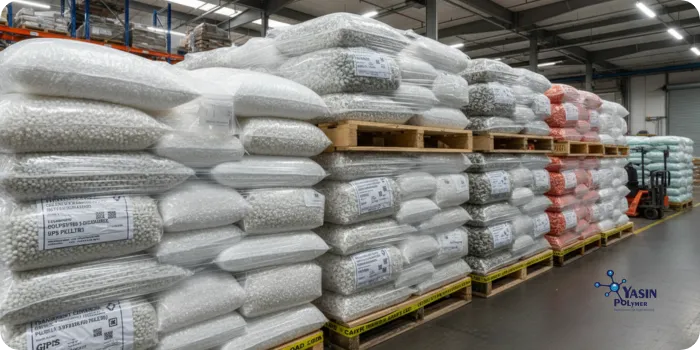
Packaging Guidelines for EPS
Packaging for Expanded Polystyrene (EPS) is dictated by its specific challenges: low bulk density, high volume, and a high susceptibility to generating static electricity, which can create dust hazards and ignition risks.
Packaging EPS in Bags (25kg)
The standard 25kg bag for EPS is typically a woven polypropylene bag engineered for breathability (to allow blowing agent to vent) while preventing contamination. These bags must include an inner polyethylene (PE) liner to serve as a barrier against moisture and dust. For product integrity, these liners should be securely heat-sealed, not merely tied, to create a complete seal.
Bulk Packaging for EPS (FIBCs and Octabins)
For bulk B2B shipments, FIBCs (Flexible Intermediate Bulk Containers)—also known as bulk bags—and rigid Octabins (eight-sided corrugated containers with a liner) are the industry standard. These provide efficient, high-volume handling. Due to the high static ignition risk of EPS, specific anti-static FIBCs are mandatory:
- Type C FIBCs: These “conductive” bags are made with interwoven conductive threads and must be electrically grounded via a grounding tab during all filling and emptying operations to safely dissipate static charge.
- Type D FIBCs: These “anti-static” or “dissipative” bags are made from materials that dissipate static charge into the atmosphere and do not require grounding. However, they must not be used in environments where flammable vapors or gasses are present.
Packaging Guidelines for GPPS
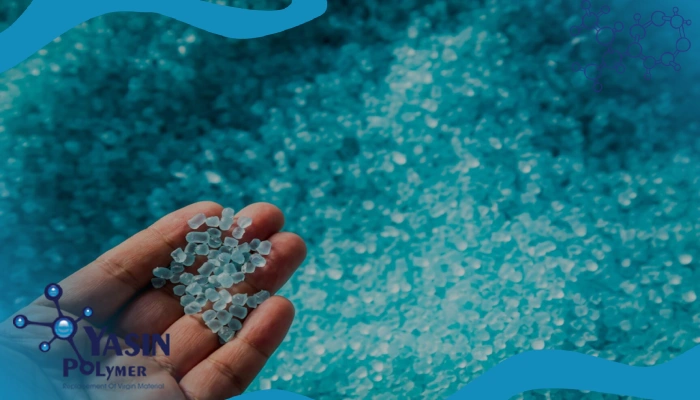
General Purpose Polystyrene (GPPS) pellets are harder, heavier, and more abrasive than EPS beads. Packaging protocols therefore prioritize puncture resistance and absolute cleanliness, as even minor contamination from foreign particles can be costly and lead to product rejection.
Packaging GPPS in Bags (25kg)
Standard 25kg bags for GPPS must offer superior puncture and tear resistance. Common specifications include multi-layer paper bags (often 3-ply) that incorporate a polyethylene (PE) liner for moisture protection, or heavy-duty co-extruded PE bags that provide excellent durability against the abrasion from hard pellets.
Bulk Packaging and Silo Transport
For large-volume delivery, GPPS is almost exclusively shipped in bulk road tankers (silo trucks). The product is loaded and unloaded using pneumatic conveying systems. The design of this system is critical for maintaining product quality.
- Breakage Minimization: Systems should use low-velocity or “dense phase” conveying to prevent the brittle GPPS pellets from shattering, which creates dust (“fines”) and degrades quality.
- Static Control: All hoses, pipes, and connectors in the system must be electrically grounded to prevent static buildup.
- Dedicated Equipment: Ideally, tankers and hoses should be dedicated exclusively to GPPS or similar clear polymers to eliminate any risk of cross-contamination.
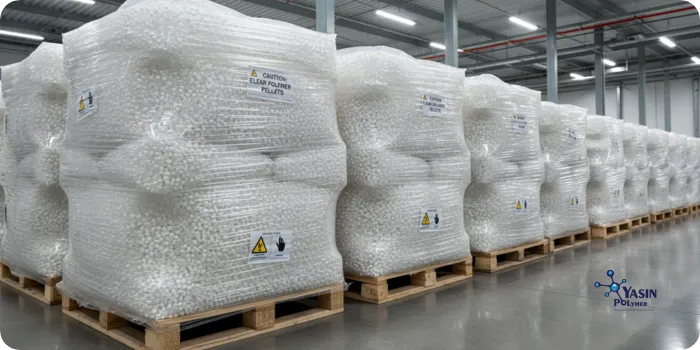
Transport and Shipping Guidelines
Vehicle and Container Preparation
Before any product is loaded, the truck trailer or sea container must be rigorously inspected. Reject any vehicle that fails this 4-point check:
- Inspect for Cleanliness: The container must be completely clean. There can be no dust, dirt, or residue from any previous cargo.
- Ensure Dryness: The interior must be 100% dry. Check for any signs of leaks in the roof or seals.
- Check for Odors: Polystyrene is highly susceptible to absorbing odors. The container must be odorless. Reject any unit with strong smells from spices, chemicals, oils, or other previous loads.
- Check for Damage: Inspect for any physical damage, such as holes in the walls, protruding nails, or sharp edges that could puncture or tear bags and FIBCs during transit.
Loading and Securing Cargo
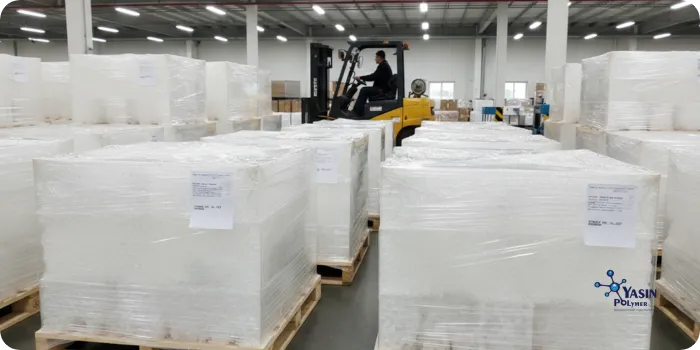
Cargo must be loaded to prevent shifting. Bags should be stacked securely on high-quality pallets, stabilized with shrink-wrap, and potentially strapped. FIBCs and octabins must be loaded in a stable, interlocking pattern. Do not double-stack pallets or FIBCs unless explicitly approved by the packaging manufacturer, as the bottom layer can be crushed, compromising the product.
Transport Classification (ADR, RID, IMDG)
Standard solid EPS and GPPS are typically classified as non-hazardous for transport under international regulations like ADR (Road), RID (Rail), and IMDG (Sea). This simplifies logistics significantly. However, you must always refer to the product-specific Safety Data Sheet (SDS) provided by the manufacturer. The critical exception is for EPS containing flammable blowing agents (like Pentane), which may fall under specific transport requirements, such as Class 9 (Miscellaneous dangerous goods), and require appropriate placarding and handling.
Critical Storage and Handling Conditions
- Storage Location: Store in a cool, dry, well-ventilated indoor warehouse.
- Temperature: Keep away from all direct heat sources, such as steam pipes or heaters. This is critical for EPS to prevent premature expansion or fusion of the beads.
- Sunlight: Do NOT store in direct sunlight. Opaque warehouse walls or storage away from windows is necessary to prevent UV degradation.
- Ignition Sources: Due to static and dust risks, polystyrene storage areas must be kept strictly separate from open flames, welding arcs, sparks, and designated smoking areas.
- Stacking: Adhere strictly to the manufacturer’s guidelines for stacking pallets or FIBCs to prevent crushing and maintain stability.
EPS vs. GPPS Handling Quick Guide
| Guideline | EPS (Beads) | GPPS (Pellets) |
| Main Hazard | High Static / Dust | Contamination / Puncture |
| Bulk Packaging | FIBCs (Type C/D) / Octabins | Silo Tankers / FIBCs |
| Bag Type | PE Lined Bags | Multi-layer Paper or Heavy PE |
| Handling | Grounding essential | Grounding + Puncture Avoidance |
Frequently Asked Questions (FAQ)
Is polystyrene hazardous material for transport?
Standard solid EPS and GPPS are typically classified as non-hazardous under regulations like ADR, RID, and IMDG. However, you must always verify with the product’s Safety Data Sheet (SDS). EPS containing flammable blowing agents (like Pentane) is an exception and may be regulated, often as a Class 9 material.
How do you prevent static electricity when packaging polystyrene?
Static control is critical, especially for EPS. Key methods include using specialized bulk bags (FIBCs), such as Type C (which must be grounded) or Type D (anti-static). Additionally, all pneumatic conveying equipment, including hoses and nozzles, must be properly grounded, and maintaining a controlled humidity level in the plant can also help.
What is the best way to store EPS?
EPS must be stored in a cool, dry, and well-ventilated indoor area. It is crucial to keep it away from direct sunlight (to prevent UV degradation) and all sources of heat or ignition (like sparks or flames) to prevent premature expansion and manage fire risk.