Future of Polystyrene in a Circular Economy
2025-11-22
Lifecycle Assessment (LCA) of GPPS and EPS Materials
2025-12-03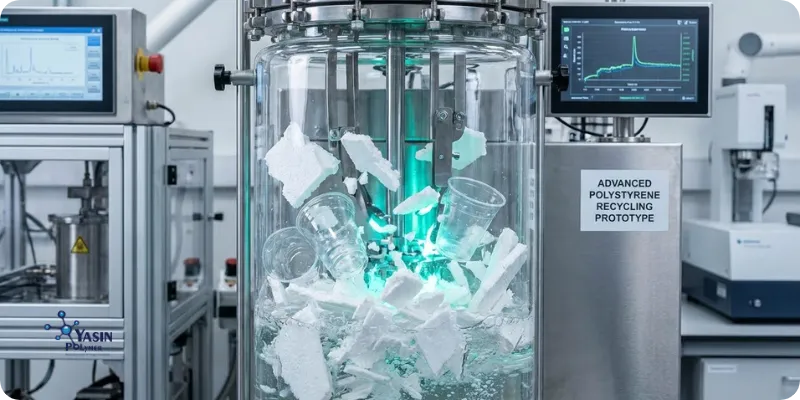
Advanced Recycling Technologies for Polystyrene Waste
Advanced recycling for polystyrene is defined as the suite of chemical and solvent-based processes specifically Depolymerization, Dissolution, and Pyrolysis capable of reverting post-consumer waste into virgin-quality monomers or petrochemical feedstock.
Key Takeaways
-
The Limitation: Mechanical recycling causes thermal degradation and cannot remove food contamination, rendering it insufficient for a circular economy.
-
The Solution: Chemical recycling (depolymerization) leverages polystyrene’s unique “ceiling temperature” to unzip the polymer chain back to styrene monomer with high yields.
-
The Viability: As of 2025, commercial-scale plants are operational, utilizing solvent purification to remove legacy additives like HBCD.
-
The Benefit: These technologies transform waste from a disposal liability into a valuable feedstock, decoupling production from fossil fuel extraction.
For decades, the plastics industry has viewed Expanded Polystyrene (EPS) and Extruded Polystyrene (XPS) primarily as waste management headaches. Lightweight, bulky, and frequently contaminated, these materials have historically ended up in landfills. However, a paradigm shift is occurring in 2025. We must no longer view polystyrene waste as garbage, but rather as a valuable “above-ground mine” of styrene monomer.
While mechanical recycling fails to achieve scale due to material degradation and contamination thresholds, advanced recycling technologies offer a scientifically viable path to true circularity. This guide provides a comprehensive technical analysis of these processes, their economic viability, and the Life Cycle Assessment (LCA) data defining the sector in 2025.
Why Traditional Mechanical Recycling Is Insufficient
To understand the necessity of advanced recycling, one must first grasp the molecular limitations of traditional mechanical methods. Mechanical recycling involves sorting, washing, shredding, and re-extruding plastic. While effective for simple polymers like PET bottles, this process subjects the polystyrene polymer chain to significant thermal stress and shear forces. This results in polymer degradation, where the molecular weight of the plastic decreases with each heat cycle, leading to a brittle end-product.
1. The Downcycling Trap
Because mechanical recycling shortens the polymer chains, the resulting Recycled Polystyrene (rPS) possesses significantly lower tensile strength and impact resistance than virgin material. Furthermore, the material often suffers from yellowing and optical imperfections. Consequently, mechanically recycled PS is rarely suitable for its original application (e.g., protective packaging). Instead, it is “downcycled” into low-value, long-life applications such as flower pots, park benches, or insulation boards, which eventually reach an end-of-life state where no further recycling is possible.
2. The Contamination Barrier
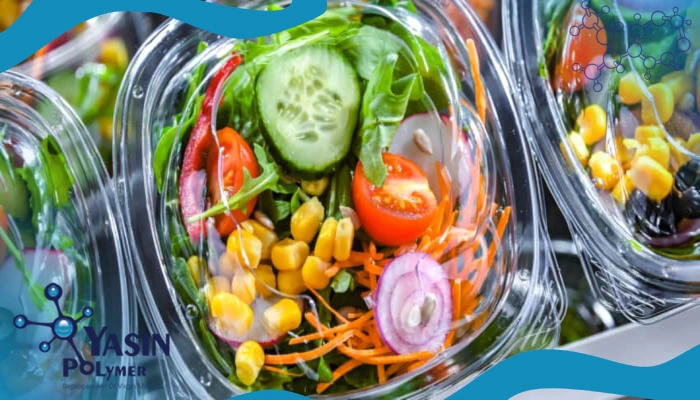
Polystyrene is the dominant material for food service packaging (takeout containers, coffee cups, trays). Mechanical recycling cannot remove absorbed food oils, biological residues, or odors at a molecular level. To meet FDA or EFSA food-contact safety standards, the plastic must be 99.9% pure. The rigorous, high-temperature washing required to attempt this with mechanical recycling is often more expensive than producing virgin plastic, rendering the process economically unviable.
3. The Logistics of “Shipping Air”
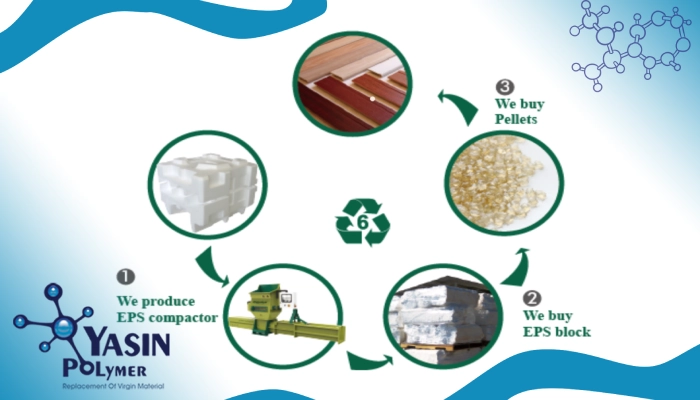
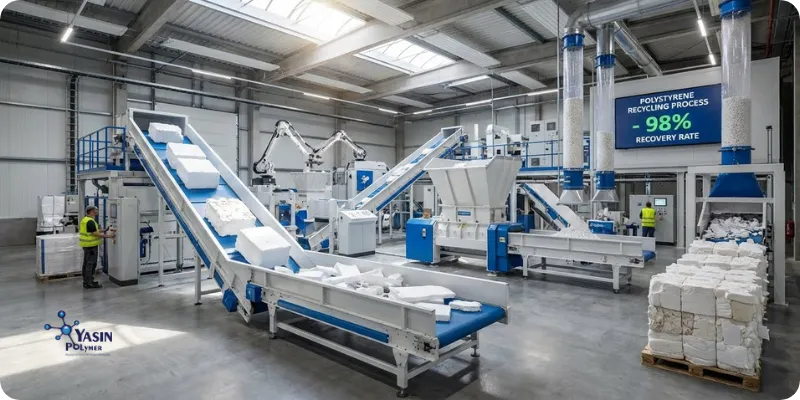
Expanded Polystyrene (EPS) is roughly 98% air and only 2% plastic. This density issue creates a massive logistical hurdle known as “shipping air.” The carbon footprint and financial cost of transporting lightweight EPS waste to a mechanical recycling facility often exceed the value of the recovered material. While densifiers (compactors) exist, widespread adoption requires infrastructure that is currently lacking.
The Legislative Angle: Beyond technical constraints, legislative pressure is reshaping the landscape. Governments across the EU and North America are implementing bans on single-use polystyrene not because the material is unrecyclable, but because mechanical recycling statistics are artificially low. Advanced recycling is the industry’s necessary response to prove that PS can be part of a sustainable future, potentially reversing these bans by demonstrating high recovery rates.
Overview of Advanced Recycling Methods
The terminology in the recycling sector is often used loosely, leading to confusion between distinct technical processes. To maintain technical accuracy, we categorize the technologies into three main pillars based on how they interact with the polymer chain.
1. Chemical Recycling (Depolymerization)
This process involves breaking the chemical bonds of the polymer chain to revert the plastic back to its original building blocks. In the context of polystyrene, this means “unzipping” the chain to recover Styrene Monomer. This monomer is indistinguishable from fossil-fuel-based styrene and can be repolymerized into virgin-quality plastic.
2. Thermal Cracking (Pyrolysis)
Pyrolysis involves heating the plastic in an oxygen-free environment to break the long polymer chains randomly. This does not produce monomers directly but rather a mix of hydrocarbons known as Pyrolysis Oil or Naphtha. This oil serves as a feedstock for steam crackers to produce various plastics, not just polystyrene.
3. Physical Recycling (Dissolution)
Often mislabeled as “chemical recycling” by competitors, this method is technically a Solvent-Based Purification process. It does not break the chemical bonds of the polymer chain. Instead, it dissolves the polymer in a selective solvent, separating it from contaminants (like food or additives) at a molecular level, and then precipitates the clean polymer back out.
Distinction Note: The critical distinction lies in the bond breaking. Chemical recycling (Depolymerization/Pyrolysis) breaks bonds to create new feedstock. Physical recycling (Dissolution) cleans the existing bonds to restore the polymer.
Depolymerization: The Gold Standard for Polystyrene
Polystyrene possesses a unique thermodynamic property that makes it the ideal candidate for advanced recycling: a low Ceiling Temperature ($T_c$). Unlike Polyethylene (PE) or Polypropylene (PP), which degrade into a chaotic mix of hydrocarbons when heated, polystyrene has a natural tendency to “unzip” or depolymerize back into its primary monomer, Styrene, with high selectivity when heated above roughly 310°C.
Thermal Depolymerization
The most direct method involves heating the polystyrene waste to temperatures between 350°C and 400°C. In this thermal window, the C-C bonds in the polymer backbone undergo scission. Because of the stability of the styrene radical, the chain unzips rapidly. The resulting gas is condensed and distilled.
-
Yield: This method can achieve high monomer recovery, but without strict temperature control, it can also produce dimers, trimers, and other oligomers that require further separation.
Catalytic Depolymerization
To improve efficiency and lower energy costs, industrial processes increasingly utilize catalysts (such as metal oxides or zeolites). Catalysts lower the activation energy required for the bond scission, allowing the reaction to occur at lower temperatures.
-
Benefit: Lower temperatures reduce the formation of byproducts (char and non-condensable gases), significantly increasing the selectivity for Styrene Monomer. This ensures the output requires less energy-intensive purification before it can be used to make new plastic.
Microwave-Assisted Pyrolysis
An emerging subset of depolymerization utilizes microwave radiation rather than external heat sources. Polystyrene is transparent to microwaves, so a microwave-absorbent material (like carbon) is often mixed in.
-
Mechanism: Microwaves target the material volumetrically, heating from the inside out based on the dipole moment of the additives or the absorbent bed. This results in extremely rapid heating rates and precise temperature control.
-
Yield Efficiency: This method is notable for minimizing secondary reactions. Consequently, microwave-assisted depolymerization boasts some of the highest Yield Efficiencies in the industry, capable of converting over 70% of the waste input directly into styrene monomer—a yield statistic that far outstrips advanced recycling yields for polyolefins.
The Output: The ultimate value proposition of depolymerization is the production of Styrene Monomer. This liquid is chemically identical to styrene produced from petroleum. It is FDA-compliant and safe for food-contact applications, solving the primary limitation of mechanical recycling.
Solvent-Based Purification (Dissolution Technology)
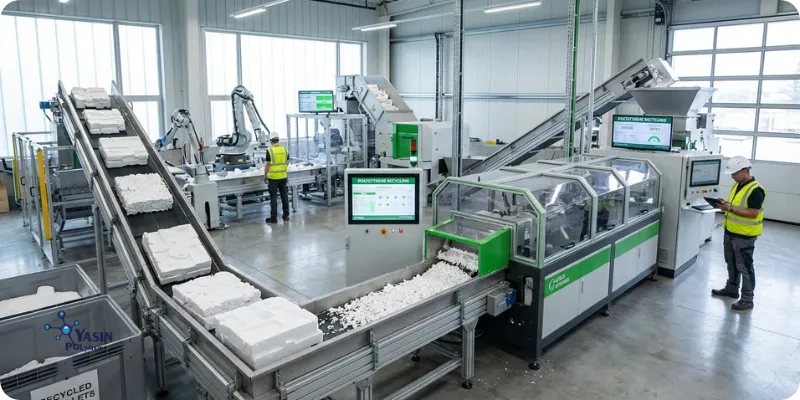
For waste streams that are physically contaminated but chemically intact, solvent-based purification offers a lower-energy alternative to depolymerization. This technology is particularly effective for removing hazardous legacy additives.
The Process
The dissolution process generally follows a four-step workflow, often referred to in the industry as the CreaSolv® Process principle or similar variations:
-
Dissolution: The PS waste is shredded and submerged in a specific solvent. Common solvents include Limonene (a terpene extracted from citrus peels), Cymene, or proprietary biodegradable solvents. The solvent selectively dissolves only the polystyrene, leaving other plastics and contaminants solid.
-
Filtration: The solution is passed through fine filtration units. This step removes insoluble contaminants such as paper labels, food waste, dirt, and other polymers like PP or PET that may have been mixed in.
-
Precipitation/Extraction: A non-solvent (or antisolvent) is introduced, or the temperature is altered, causing the pure polystyrene to precipitate out of the solution. Alternatively, the solvent is evaporated.
-
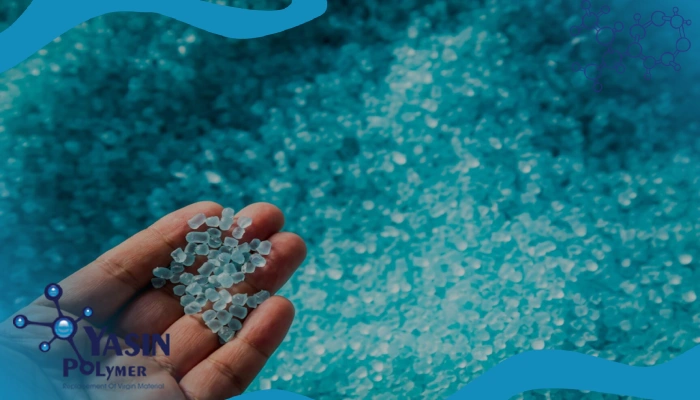
Drying: The recovered polystyrene is dried and extruded into pellets.
Energy and Chemical Advantages
Because the process relies on physical phase changes (solid to liquid and back) rather than chemical bond breaking, the theoretical energy consumption is lower than depolymerization. It avoids the high heat required to crack molecules.
The HBCD Factor: A critical, often unseen advantage of dissolution technology is its ability to handle Legacy Additives. Much of the EPS used in construction prior to 2015 contains Hexabromocyclododecane (HBCD), a flame retardant now banned under the Stockholm Convention. Dissolution technologies can chemically separate HBCD from the polymer matrix during the filtration/precipitation stage, allowing the HBCD to be safely destroyed while recovering the clean polystyrene. This capability makes dissolution the only viable route for recycling millions of tons of historical construction foam.
Pyrolysis and Gasification: Converting PS to Oil
Pyrolysis represents the “catch-all” safety net of advanced recycling. It is primarily used when polystyrene is part of a heavily mixed, low-quality plastic waste stream that cannot be economically sorted for depolymerization or dissolution.
The Output: Unlike depolymerization, which targets the monomer, pyrolysis converts the plastic into Pyrolysis Oil or Naphtha. This synthetic crude oil cannot be used directly to make plastic. It must be fed into a steam cracker—the massive furnaces at the heart of petrochemical plants—where it is cracked into ethylene, propylene, and styrene.
Pros and Cons:
-
Pros: High tolerance for contamination and mixed polymers (PE, PP, PS combined).
-
Cons: It is a longer, less efficient route back to a product. You are turning plastic into oil, then oil into monomers, then monomers into plastic.
The Dilution Effect: A technical reality often omitted in marketing is the dilution requirement. Pyrolysis oil from polystyrene often creates a feedstock that is too rich in aromatics or has high impurity levels (like chlorine or nitrogen) for standard steam crackers. Consequently, it must be diluted with fossil-based naphtha (often at ratios of 10:1 or 20:1). This complicates the “100% recycled” claim, forcing manufacturers to use a Mass Balance Approach to attribute recycled credit to the final product.
Comparative Analysis: Depolymerization vs. Dissolution vs. Pyrolysis
For decision-makers and investors, choosing the right technology depends on the input feedstock and the desired output. The following table compares technical specifications and readiness levels.
| Technology Name | Primary Output | Energy Intensity | Contamination Tolerance | TRL (Tech Readiness Level) |
| Depolymerization | Styrene Monomer | High | Moderate (Must be mostly PS) | Industrial (TRL 8-9) |
| Dissolution | Polystyrene Polymer | Medium | Low (Sensitive to moisture/non-PS) | Pilot/Industrial (TRL 7-8) |
| Pyrolysis | Pyrolysis Oil / Naphtha | High | High (Handles mixed plastics) | Mature (TRL 9) |
Summary Analysis: Depolymerization offers the highest value proposition for pure PS streams because it creates a direct path to high-value monomers with the fewest processing steps. Dissolution is the energy-efficient choice for post-industrial or specifically sorted post-consumer waste where polymer chain integrity is preserved. Pyrolysis serves as the necessary infrastructure for complex, mixed waste streams that fail sorting criteria.
Yield to Virgin Ratio: When evaluating efficiency, Depolymerization holds the advantage in the “Yield to Virgin” ratio. It offers the shortest path to a virgin-equivalent material. Pyrolysis requires downstream cracking, which introduces further yield losses.
Emerging Trends: Bio-Enzymatic Recycling
While thermal and solvent methods dominate the industrial landscape of 2025, biological recycling represents the frontier of R&D.
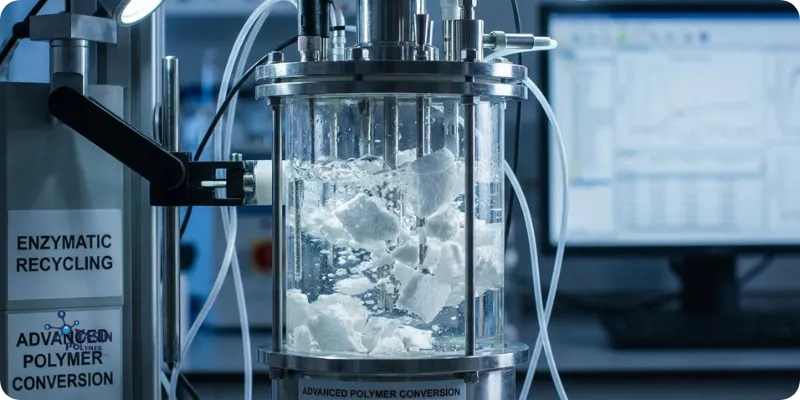
Researchers are actively optimizing the use of Mealworms (Tenebrio molitor) and superworms, which possess gut bacteria capable of depolymerizing polystyrene. Furthermore, scientists are engineering enzymes capable of Enzymatic Hydrolysis, targeting the carbon backbone of the polymer.
Reality Check: While promising, bio-recycling currently suffers from slow reaction rates and difficulty in scaling. Biological organisms are sensitive to environmental conditions and cannot match the throughput of a thermal reactor. However, the unseen potential lies in “Hybrid Systems,” where enzymes could be used to treat the residue or “bottoms” of mechanical recycling processes, finishing the job that other technologies started.
Environmental Impact and Life Cycle Assessment (LCA)
For investors and policy makers, the environmental case for advanced recycling is hinged on data. LCAs conducted in 2024 and 2025 have solidified the position of these technologies.
-
CO2 Footprint vs. Incineration: Advanced recycling of polystyrene results in approximately 50% less CO2 emissions compared to incineration (energy recovery), which is the current fate for most non-recyclable PS.
-
Fossil Displacement: For every ton of styrene monomer produced via depolymerization, the industry avoids the extraction and refining of crude oil required to produce that same ton from scratch.
-
Certification Standards: The industry relies on ISCC PLUS certification. This third-party verification uses the Mass Balance Approach to trace recycled content through the complex value chain, ensuring that sustainability claims are auditable and accurate.
The Water Footprint Trade-off: While dissolution technologies save energy by avoiding bond-breaking, they often have a higher water footprint due to the solvent recovery and washing steps required. Depolymerization, being a thermal process, generally consumes less water but more energy. This trade-off must be considered based on the specific location of the recycling plant.

Major Market Players and Technologies
The transition from “Pilot” to “Commercial” scale is the defining characteristic of the 2024-2025 market cycle.
Agilyx
A pioneer in the field, Agilyx focuses heavily on Depolymerization reactor technology. Their robust systems are capable of handling highly contaminated polystyrene feedstocks, converting them back into styrene monomer with high yields. They have moved beyond theory, licensing their technology to major petrochemical partners globally.
Ineos Styrolution
As a global styrenics giant, Ineos has adopted a partnership strategy. They are aggressively scaling capacity by integrating advanced recycling outputs directly into their massive existing infrastructure. Their focus is on closing the loop to produce food-contact quality polystyrene at an industrial scale.
Polystyvert
Based in Canada, Polystyvert specializes in Dissolution Technology. Their unique approach involves a patented dissolution process that can separate contaminants efficiently. Notably, they have developed portable dissolution units that can be deployed to high-waste generation sites, solving the “shipping air” logistics problem by dissolving EPS on-site before transport.
Pyrowave
Pyrowave leads the sector in Electric Microwave Technology. Their modular microwave-assisted depolymerization units offer an electrified, low-carbon alternative to traditional thermal processes. By electrifying the process, they can decouple recycling from natural gas combustion, offering a pathway to zero-carbon recycling if powered by renewables.
Conclusion
The era of regarding polystyrene as a single-use, disposable material is ending. Mechanical recycling has hit a technological ceiling; it simply cannot meet the purity requirements for food-grade applications or the volume requirements of a global market.
The future of the circular economy for styrenics lies in a tiered infrastructure: Depolymerization to handle contaminated food packaging and Dissolution to manage industrial and construction waste. These technologies convert a waste crisis into a resource opportunity. Now, the burden shifts to investment in collection infrastructure. We have the technology to recycle polystyrene; we now need the supply chains to feed these advanced plants and close the loop permanently.
FAQs
Is chemical recycling of polystyrene profitable?
Yes, particularly when oil prices are high, as this increases the cost of virgin styrene. Additionally, manufacturers are willing to pay a “green premium” for recycled content to meet sustainability goals, and Extended Producer Responsibility (EPR) taxes in Europe are making landfilling increasingly expensive compared to recycling.
Can Expanded Polystyrene (Styrofoam) be chemically recycled?
Yes. In fact, EPS is often an ideal feedstock for chemical recycling due to its simple chemistry (mostly pure polystyrene) and high volume. Despite the “shipping air” issue, once densified, it converts to monomer with very high efficiency.
What is the difference between mechanical and advanced recycling?
Mechanical recycling alters the physical form of the plastic (chopping/melting), often degrading its quality. Advanced recycling alters the chemical structure (breaking or purifying bonds) to remove impurities and restore the material to virgin-quality status.
Is polystyrene biodegradable?
No, traditional polystyrene is not biodegradable. It persists in the environment for centuries. This persistence is exactly why advanced recycling is critical—it provides a way to remove this durable material from the environment and keep it in the economy.