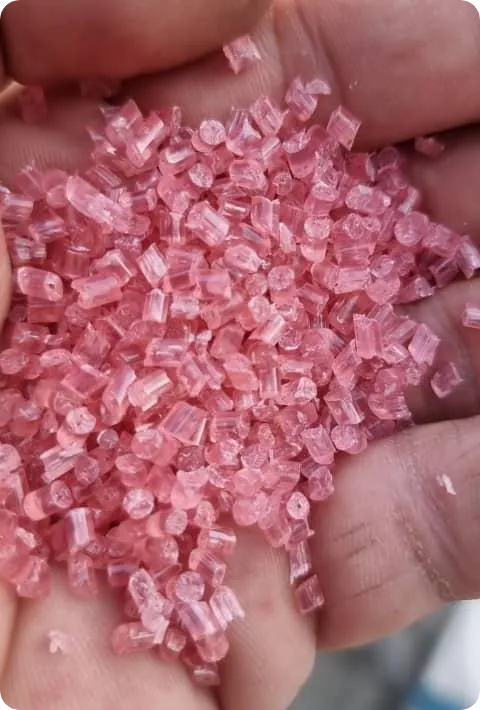
GPPS Virgin Compound (General Purpose Polystyrene) stands as a high-performance polymer that combines remarkable clarity, rigidity, and ease of processing. Known for its consistent quality, this prime-grade, non-recycled resin delivers superior transparency and a smooth, glossy finish—making it the material of choice for high-end packaging and precision-molded applications. Whether you're producing food-safe containers or intricate molded parts, GPPS Virgin Compound ensures reliable, high-quality results, every time. In this guide, we'll explore its key characteristics, industrial uses, and why it outperforms recycled variants in critical applications.
| PROPERTIES | TEST METHODS | TEST METHOD | UNITS | VALUES |
| General | ||||
| Density | – | ISO 1183 | $g/cm^3$ | 1.05 |
| Bulk density | – | ISO 60 | $g/cm^3$ | 0.55–0.65 |
| Residual Monomer | – | ISO | ppm | < 500 |
| Rheological | ||||
| Melt flow rate | $200^\circ C$ – 5kg | ISO 1133 | $g/10’$ | 6–7.5 |
| Thermal | ||||
| Vicat softening temperature | $10 N$ – $50^\circ C/h$ | ISO 306/A | $^\circ C$ | > 104 |
GPPS Virgin Compound
GPPS Virgin Compound, or General Purpose Polystyrene, is a prime-grade, non-recycled polymer resin known for its exceptional clarity, rigidity, and ease of processing. While often seen as a commodity, its “virgin” status is the key to consistent quality, making it the only choice for high-clarity packaging and precision-molded parts where recycled materials would fail. This guide covers its core technical properties, key commercial applications, and how it compares to recycled grades for industrial procurement.
What is GPPS Virgin Compound?
GPPS stands for General Purpose Polystyrene, a clear and rigid amorphous polymer. The term “virgin” signifies that it is a prime resin, meaning it is 100% new, non-recycled material directly from the manufacturer, free from any re-processed content. As a “compound,” this raw material is supplied in pellet or granule form, ready for processing. While valued for its exceptional transparency and low cost, its primary limitation is its inherent brittleness.
Virgin GPPS vs Recycled GPPS
For purchasing managers and engineers, the choice between virgin and recycled GPPS comes down to a trade-off between performance and cost. While recycled GPPS offers a lower price point, it introduces significant variability in purity, strength, and processing. Virgin GPPS provides the consistency and technical performance required for high-specification applications.
| Property | GPPS Virgin Compound (Prime Grade) | Recycled GPPS (Re-processed) |
| Clarity / Transparency | Excellent, often >90% light transmission | Poor, often yellowish, greyish, or opaque |
| Color Consistency | Perfect, highly consistent lot-to-lot | Varies significantly by batch and source |
| Mechanical Strength | High and predictable (per TDS) | Reduced and inconsistent due to heat history |
| Purity / Contamination | 100% pure; food-grade compliant grades available | High risk of contamination from previous use |
| Processing Stability | Very stable and predictable melt flow | Unpredictable melt flow, risk of gels/burns |
| Cost | Higher (Premium) | Lower (Commodity) |
GPPS Virgin Compound Technical Properties
The following technical properties represent typical values for a general-purpose virgin GPPS grade. Engineers and buyers should always request a specific Technical Data Sheet (TDS) from the supplier for their chosen compound.
- Melt Flow Rate (MFR): Typically ranges from 1.5 to 20 g/10 min, indicating excellent flowability for complex injection molding.
- Clarity/Transparency: Its primary feature, with light transmission often exceeding 90%.
- Tensile Strength: High rigidity, with typical values around 40-50 MPa.
- Izod Impact Strength: Notoriously brittle; exhibits low impact resistance (approx. 1.5 – 2.5 kJ/m²). Not suitable for high-impact use.
- Vicat Softening Point: Moderate heat resistance, generally around 80-100°C.
- Food Grade Status: Often available in FDA-compliant grades for direct food contact applications.
GPPS Virgin Compound Applications
The applications for GPPS virgin compound are directly related to its properties of high clarity and rigidity.
Applications for High Clarity
The exceptional transparency and gloss of virgin GPPS make it the ideal choice for applications where visual appeal is paramount:
- Cosmetic packaging (clear compacts, lipstick cases, and jars)
- Classic CD/DVD jewel cases
- Food containers (clear salad boxes, bakery trays, and yogurt cups) Note: Requires FDA-compliant food-grade resin.
- Office and stationery supplies (pen barrels, tape dispensers, desk organizers)
Applications for Rigidity and Cost
Where high rigidity and low cost are the primary drivers, GPPS is used for dimensionally stable, non-structural parts:
- Disposable cutlery, plates, and cups
- Medical and lab equipment (e.g., petri dishes, test tubes, pipettes)
- Housing for small electronics and internal components
- Toys and model kits (specifically non-impact parts)
How to Process GPPS Virgin Compound
GPPS virgin compound is favored for its excellent processability and thermal stability. Before processing, it is essential to pre-dry the pellets, as moisture absorption can cause splay marks on the final product. The two most common high-volume methods are injection molding and extrusion.
Injection Molding GPPS
This is the most common method for producing complex parts. Virgin GPPS exhibits excellent, predictable melt flow, allowing it to fill intricate molds with precision. It also has very low and consistent mold shrinkage, ensuring high dimensional accuracy and part-to-part repeatability, which is critical for assembly.
Extrusion GPPS
Extrusion is used to create continuous profiles, primarily sheets and films. These extruded sheets are often subsequently used in thermoforming to create products like disposable cups and food trays. The stable melt strength of virgin GPPS allows for uniform sheet thickness and a high-gloss finish.
Factors Affecting GPPS Virgin Compound Price
The market price for GPPS virgin compound is dynamic. For procurement, understanding these variables is key to sourcing and budgeting:
- Crude Oil & Styrene Monomer Price: The polystyrene cost is directly tied to upstream raw material prices.
- Global Supply and Demand: Manufacturing trends and plant shutdowns impact availability.
- Manufacturer and Brand: Prime-grade resin from major producers carries a premium.
- Specific Grade: Specialized grades, such as FDA food-grade, have a higher GPPS price.
- Order Volume: Bulk purchasing (full truckload) significantly reduces the per-kilogram cost.
GPPS Virgin Compound FAQ
Is GPPS food safe?
A: Only specific “food grade” virgin GPPS compounds are compliant with FDA regulations. General-purpose grades must not be used for food contact. Always verify the grade by checking the specific Technical Data Sheet (TDS) from your supplier.
What is the difference between GPPS and HIPS?
A: The primary difference is impact strength. GPPS (General Purpose Polystyrene) is clear and very brittle. HIPS (High Impact Polystyrene) is opaque and much tougher because it is a compound of polystyrene and polybutadiene rubber, which acts as an impact modifier.
How should GPPS virgin compound be stored?
A: The compound must be stored in a cool, dry place, away from direct sunlight. Bags or octabins should remain sealed in their original packaging to prevent moisture absorption and contamination, which can cause defects during processing.